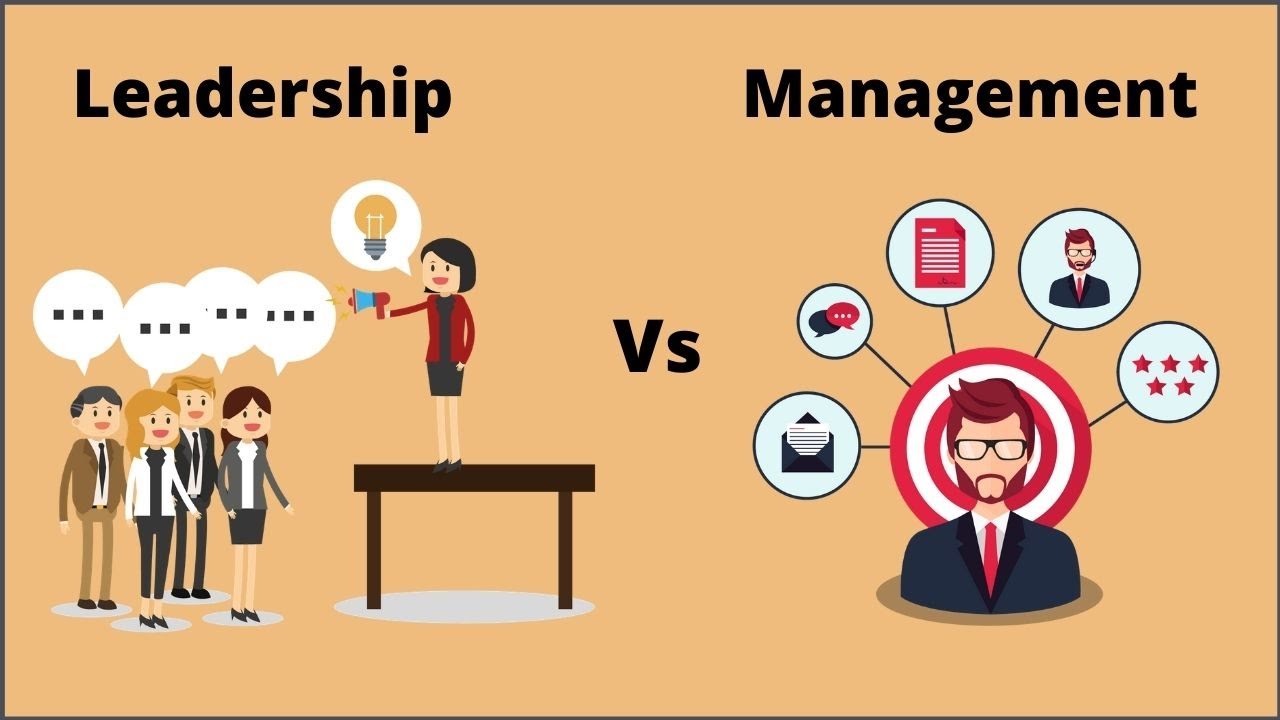
Harvard Business School professor emeritus John P. Kotter, internationally renowned expert on management, change, and leadership, has written widely for both academic and popular audiences. In a 2013 piece for Harvard Business Review, among other publications, he noted that management is a different type of skill than leadership.
Kotter’s watershed 1990 book, entitled A Force for Change: How Leadership Differs from Management, provides much still-relevant granular detail on both spheres of organizational influence. In Kotter’s view, management and leadership are complementary, and equally essential, functions. Kotter believes organizations need exceptionally skilled managers and visionary, gifted leaders. Sometimes these are skill sets demonstrated within a single individual. In other situations, leadership and management can come from different roles. And, regardless of the configuration, we need leadership and management to work productively together, with each other, and with the entire team.
Over his decades of analyzing business success and failure for organizations of every type, Kotter has consistently seen clients misuse the terms “management” and “leadership,” mixing and meshing them up in ways that aren’t meaningful or helpful. Most people, he wrote in the 2013 article, fall into three errors when they try to conceptualize the two words.
1. There Is a Difference between “Management” and “Leadership”
The confusion between “leadership” and “management” can stymie a company as it works to scale and develop its market reach. Keeping organizations running with efficiency and fluidity is management. Leadership is an entirely different animal. As Kotter wrote in a 2001 HBR article, the core of leadership is vision, but leadership is also just as much about impact and action.
Put another way, management is about continuity and consistency. Leadership is about adaptation and change.
2. The Meaning Isn’t in the Job Title
The second big mistake is focusing on labels instead of meaning. It’s common within larger organizations to use the word “leadership” to talk about the people who sit in the C-suite at the top of the hierarchy, while calling their direct reports “management.” The remainder of the company consists of “workers,” “technicians,” “front-line staff,” and the like. But that’s a very limited view that doesn’t allow an organization to respond nimbly to change, opportunities, or threats.
Regardless of where their employment classifications appear on an organizational chart, leaders are necessary to help a business move forward. If you think a handful of high-ranking executives are the only people in your organization who can provide leadership, you’ve already set yourself up to fail.
3. Leadership Isn’t Always Charismatic
It’s become common ove the past several decades to think of “leaders” as people endowed with distinct character traits—charisma in particular. This line of thinking says that leaders will reveal themselves through their extraordinary, inborn talent for exciting people and motivating others to comply with their every request. Very few individuals possess this ability, so if you hold this idea, you are saying that there are few “real leaders” in the world. Moreover, research by Jim Collins and others have debunked the vision of the charismatic leader as the best or only path to organizational health and vitality.
Leadership and Management Are Complementary
“Management,” according to Kotter, is a process—or rather, a series of interlocking processes—for accomplishing tasks. The universe of management includes strategizing and planning, problem-solving, creating and maintaining a structure that delineates job duties, crafting a budget, and establishing criteria for measuring success.
Management helps organizations to accomplish what they already do well. Under good management, you get consistent results from day to day, month to month, and year to year. This is not to say that management is easy. The bigger the organization, the more complex it becomes. Managing well is a necessary condition for success.
But to succeed over the long term, to develop in new ways and new markets, to respond to challenges with positive and productive change, you need leadership.
Leadership is a skill, not a state of being. It allows people to identify opportunities and possibilities, and to take full advantage of them, even amidst a constant barrage of shifting demands and priorities. A leader empowers team members to be their best selves and to perform at the highest level. Under the guidance of a good leader, an organization can respond to a full range of opportunities and challenges with positive change.
As Kotter wrote in a 2001 HBR piece, leadership is not “mystical or mysterious.” It’s neither “better” than management, nor is it a replacement for management. He did state that most American companies are “under-led,” even as they continue to be “over-managed.” Many organizations persist in the outmoded view that leadership is a rare gift, rather than a skill that can be cultivated. As a result, they continue to hire capable people and then relegate them to management. Instead, organizations should view any new influx of talent as an opportunity to develop the next generation of leaders.
Even when focusing on leadership development, no company can afford to allow a weak management team to settle in. The challenge—and the reward for organizations forward-thinking enough to meet it—is to foster a team that includes strong managers and strong leaders.
 Ari Betof