In The Nowhere Office: Reinventing Work and the Workplace of the Future (PublicAffairs, 2022), author, entrepreneur, social policy scholar, and personal development expert Julia Hobsbawm provides us with an exploration at the reinvention of work post-COVID-19. The book resulted from Hobsbawm’s deep conversations with leaders across industries and demographics, as well as her insights and practical advice on how we should be navigating this pivotal moment in the history of humankind and how we work.
Known for her previous titles in this sphere, such as Fully Connected: Surviving and Thriving in an Age of Overload (Bloomsbury Press, 2017) and The Simplicity Principle: Six Steps Towards Clarity in a Complex World (Kogan Page, 2020), the British-born Hobsbawm has received several awards. Readers have profited from reading her incisive, data-driven, and deeply thought-out books.
Reviewers have praised The Nowhere Office as a catalyst for long-lasting and profound changes in the way we work, as well as for its conciseness and readability. Forbes called it “required reading” for anyone strategizing the next steps in the reinvention of their workplace. Whether one considers the COVID-19 pandemic waning or transitioning from pandemic to endemic, Hobsbawm offers a thoughtful perspective.
The pandemic brought change to a head
The Nowhere Office starts on the premise that the “traditional” office space we all know so well was likely already on its way to extinction even before the COVID-19 pandemic.
There were three major factors at play in this. One factor was technology. The build-out of automation pre-COVID had already given us a situation unique in history in terms of our ability to work remotely. The potential shift of much of our working life into the “metaverse,” in which virtual worlds have become, as Hobsbawm puts it, “far more real” than anyone had thought possible, promises to make this state of affairs even more vital to the way we work.
But for Hobsbawm, today’s “relentless” development of our ability for automating our jobs through ever-evolving technologies has left us chronically stressed while not yet clearly paying dividends boosting productivity.
Another of these tipping-point drivers was the world of politics. Hobsbawm zeroes in on problems involving what she defines as “inequality and sustainability.”
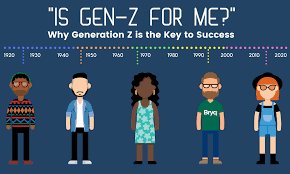
The other factor is social, and it involves our developing multi-generational workforce. Generation Z—anticipated to make up more than a quarter of the world’s workforce by the year 2025—shares office space with baby boomers, Generation Xers, and millennials.
A crucible of change
The transformational mix of these elements came together during the pandemic, fueling the realization that many people no longer need to be physically present in a traditional office to get the core of their work done.
One recent study showed that more than one-third of all Americans can do their jobs entirely remotely. Another 23 percent have received offers from their employers to work from home at least part of the time. If they were given the chance to work remotely, a full 87 percent of employees responding said they’d take it.
The presence of Gen Z in the workplace as COVID hit also likely helped us realize that work can and should be more meaningful and useful than it has been for many in the past. Instead of simply clocking in every day and drawing a paycheck, this youngest generation in our workforce is prompting society to ask questions such as, “How much does our work contribute to our genuine well-being as full human beings?” and “Does our work have a clear and constructive purpose?”
A transformation of needs and roles
As Hobsbawm shows, the traditional office grew up around the role of middle managers, who, taking instruction from the executive level, told their front-line teams how they were going to build a product or solve a problem. But these same mid-level job functions also helped create an increasingly complex workplace bureaucracy. Now, remote teams are finding a crucial need to accomplish tasks like scheduling asynchronous teams in hybrid work environments. They’re also investing more in redefining what top performance means.
Making work more human
Hobsbawm’s emphasis here is the need to re-center the “human” in human resources. She wants corporations to focus more on their relationships with their teams and less on obsolete types of employee performance evaluations.
With this goal in mind, she wants to see companies invest more resources into the training and development of their teams while supporting career-long learning. What would she minimize? The prioritization of values that amount to window dressing, such as “presenteeism,” and the creation of presentations designed solely to impress clients. She also wants employees who work at least part-time in brick-and-mortar offices to be able to work in urban business spaces that provide more residential and mixed-use opportunities to foster a more integrated work-life balance.
Hobsbawm warns companies still unwilling to join these trends that emerging generations of potential employees are not likely to accept business as usual.
 Ari Betof