Spotlight – John Kotter’s Classic Insights on Management and Leadership 

Harvard Business School professor emeritus John P. Kotter, internationally renowned expert on management, change, and leadership, has written widely for both academic and popular audiences. In a 2013 piece for Harvard Business Review, among other publications, he noted that management is a different type of skill than leadership.  

Kotter’s watershed 1990 book, entitled A Force for Change: How Leadership Differs from Management, provides much still-relevant granular detail on both spheres of organizational influence. In Kotter’s view, management and leadership are complementary, and equally essential, functions. Kotter believes  organizations need exceptionally skilled managers and visionary, gifted leaders. Sometimes these are skill sets demonstrated within a single individual. In other situations, leadership and management can come from different roles. And, regardless of the configuration, we need leadership and management to work productively together, with each other, and with the entire team. 

Over his decades of analyzing business success and failure for organizations of every type, Kotter has consistently seen clients misuse the terms “management” and “leadership,” mixing and meshing them up in ways that aren’t meaningful or helpful. Most people, he wrote in the 2013 article, fall into three errors when they try to conceptualize the two words.  

1. There Is a Difference between “Management” and “Leadership” 

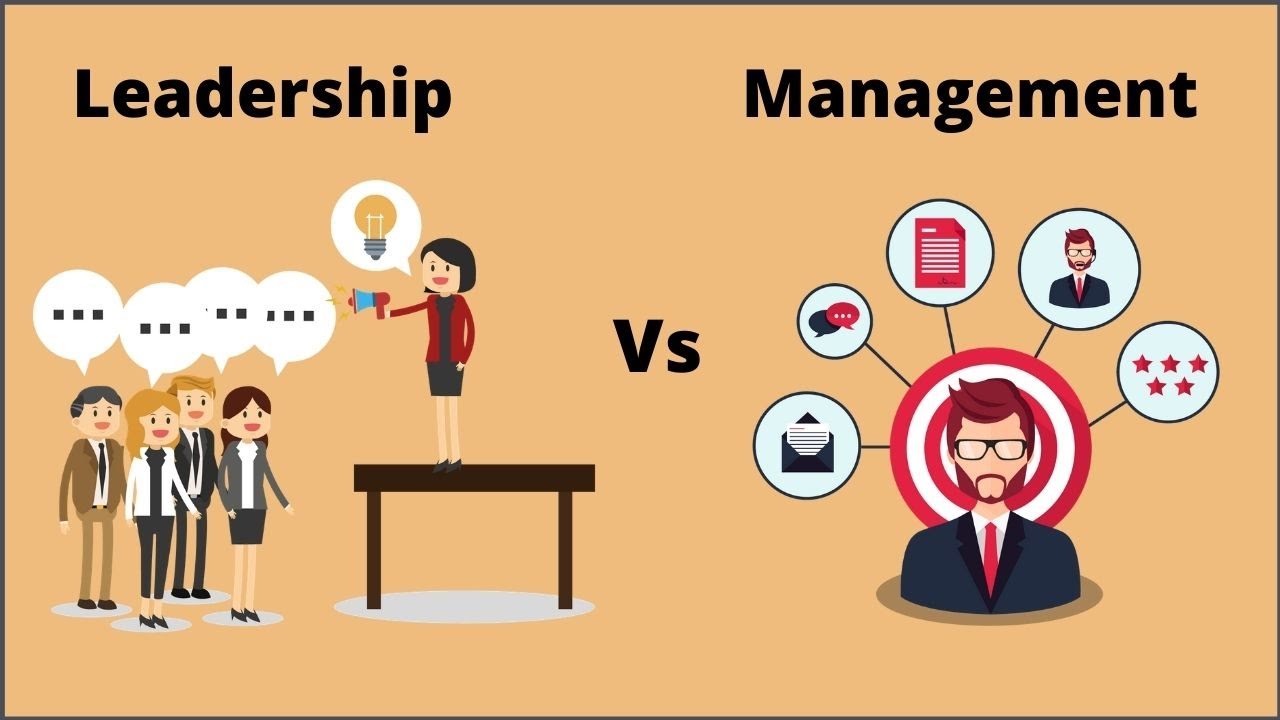
The confusion between “leadership” and “management” can stymie a company as it works to scale and develop its market reach. Keeping organizations running with efficiency and fluidity is management. Leadership is an entirely different animal. As Kotter wrote in a 2001 HBR article, the core of leadership is vision, but leadership is also just as much about impact and action. 

Put another way, management is about continuity and consistency. Leadership is about adaptation and change.  

2. The Meaning Isn’t in the Job Title 

The second big mistake is focusing on labels instead of meaning. It’s common within larger organizations to use the word “leadership” to talk about the people who sit in the C-suite at the top of the hierarchy, while calling their direct reports “management.” The remainder of the company consists of “workers,” “technicians,” “front-line staff,” and the like. But that’s a very limited view that doesn’t allow an organization to respond nimbly to change, opportunities, or threats. 

Regardless of where their employment classifications appear on an organizational chart, leaders are necessary to help a business move forward. If you think a handful of high-ranking executives are the only people in your organization who can provide leadership, you’ve already set yourself up to fail. 

3. Leadership Isn’t Always Charismatic 

It’s become common ove the past several decades to think of “leaders” as people endowed with distinct character traits—charisma in particular. This line of thinking says that leaders will reveal themselves through their extraordinary, inborn talent for exciting people and motivating others to comply with their every request. Very few individuals possess this ability, so if you hold this idea, you are saying that there are few “real leaders” in the world. Moreover, research by Jim Collins and others have debunked the vision of the charismatic leader as the best or only path to organizational health and vitality. 

Leadership and Management Are Complementary 

“Management,” according to Kotter, is a process—or rather, a series of interlocking processes—for accomplishing tasks. The universe of management includes strategizing and planning, problem-solving, creating and maintaining a structure that delineates job duties, crafting a budget, and establishing criteria for measuring success.  

Management helps organizations to accomplish what they already do well. Under good management, you get consistent results from day to day, month to month, and year to year. This is not to say that management is easy. The bigger the organization, the more complex it becomes. Managing well is a necessary condition for success.  

But to succeed over the long term, to develop in new ways and new markets, to respond to challenges with positive and productive change, you need leadership.  

Leadership is a skill, not a state of being. It allows people to identify opportunities and possibilities, and to take full advantage of them, even amidst a constant barrage of shifting demands and priorities. A leader empowers team members to be their best selves and to perform at the highest level. Under the guidance of a good leader, an organization can respond to a full range of opportunities and challenges with positive change. 

As Kotter wrote in a 2001 HBR piece, leadership is not “mystical or mysterious.” It’s neither “better” than management, nor is it a replacement for management. He did state that most American companies are “under-led,” even as they continue to be “over-managed.” Many organizations persist in the outmoded view that leadership is a rare gift, rather than a skill that can be cultivated. As a result, they continue to hire capable people and then relegate them to management. Instead, organizations should view any new influx of talent as an opportunity to develop the next generation of leaders. 

Even when focusing on leadership development, no company can afford to allow a weak management team to settle in. The challenge—and the reward for organizations forward-thinking enough to meet it—is to foster a team that includes strong managers and strong leaders. 

Peace Valley Park Offers Effortless Enjoyment for Everyone 

Bucks County, Pennsylvania, is known for the quality of its parks, lakes, and hiking trails and its dedication to preserving them. The county-owned Peace Valley Park, with Lake Galena at its heart, is one of the region’s most well-maintained, and deservedly popular, spots for relaxing and enjoying nature. 

A community treasure 

In 2021, the Bucks County Commission approved a measure providing permanent protection to the water supply and natural habitats of Lake Galena while continuing the public’s right to enjoy the lake and the park for generations to come. The preservation proposal is additionally set to generate approximately $25 million in immediate revenue through partnership with the local nonprofit water and sewer authority. 

The 1,500-acre park’s central location in Bucks County – about 20 miles from downtown Doylestown – and easy terrain gradient make it ideal for a family day out with young children and older adults. Some 14 miles of nature trails, and the meadowlands surrounding them, brim with wildlife and wildflowers. 

Lake Galena and its hiking trail 

The clear, calm surface of the more than 350 acres of Lake Galena offers an ideal location for sailing or kayaking. There’s great fishing in the lake as well. Fish species include bass, channel catfish, and white perch. 

It’s easy to rent a sailboat, rowboat, kayak, or paddle boat near the lake, where a little exploration will put you in sight of herons, kingfishers, woodpeckers, osprey, and close to 300 other local and migrating bird species. Deer, muskrats, and groundhogs are among the mammals you might spot in the park. 

The park’s 6.5-mile blacktop hiking and biking trail circumnavigates the lake, providing another vantage point to enjoy the natural beauty of the area. The park hosts regular 5K run-walk events free to the community. And the Annual Peace Valley Duathlon gives people of all ages the chance to run and bike through the vivid seasonal colors. 

The trail is also inviting for walkers and for families with strollers. Except for one small portion near the northeast side of the lake, it’s generally flat. Playgrounds and picnic sites abound, although certain spots are restricted as conservation areas for local flora and fauna. Another important thing to keep in mind is that swimming in the lake is prohibited. 

The town under the lake 

Also known as Peace Valley Reservoir, Lake Galena was created in 1974, when local authorities dammed the northern branch of Neshaminy Creek. As a reservoir, Lake Galena serves as part of the Bucks County region’s water supply system. As a recreation area and natural treasure, it’s been designated by the National Audubon Society as an Important Bird Area (IBA) due to its diversity of species. 

The area just north of Peace Valley Park and Lake Galena holds historic significance as the site of the former village of New Galena. In the mid-19th century, residents discovered the presence of galena ore – a mineral also called “lead glance” – on these lands, and a local mining industry developed. Industrialists and tourists who flocked to the area eventually became residents, energizing the local real estate economy. By the latter part of the 20th century, bust had followed boom, and New Galena was almost abandoned. At that point, local parks and recreation authorities decided to flood the ghost town and its mine to create Lake Galena. Peace Valley Park grew up around the dam, as did the trails shortly thereafter. 

Center for information 

The solar-heated Peace Valley Nature Center on Chapman Road, by the eastern edge of Lake Galena, is the best place for most new visitors to begin a day at the park. The center hosts educational displays about the park and its wildlife species and offers helpful information as you plan your day. The center also offers seasonal birding and walking tours. 

Birding backpacks available at the center include binoculars and a field guide. A duck blind is nearby, and there’s easy access to trailheads. 

A storybook trail and beyond 

Among these trails, families with young kids will especially enjoy Pooh Tree Loop. This path is so named because it’s an easy trail winding through a wooded expanse that includes an 80-foot-tall, hollowed-out sycamore called the Pooh Tree. Kids can go inside and get a chance to pretend to be Winnie-the-Pooh in his storybook-famous home in a tree. 

The trail crosses over Neshaminy Creek at numerous spots, making it a perfect place to imagine oneself to be Pooh, Christopher Robin, or Piglet splashing through puddles. The trail also offers picturesque views of Lake Galena from atop Chapman Road Bridge. 

Beyond the easy walking of Pooh Tree Loop and the blacktop loop around the lake, Peace Valley Park offers more rugged, wilderness-edged trails, but even these are quite accessible. They take walkers and hikers deeper into the woodlands with mature tree growth and into quiet sanctuaries populated by fields of wildflowers, wading blue herons, paddling turtles, and choruses of frogs. 

Peace Valley Lavender Farm out on New Galena Road is only a few miles from the park and offers strolls through fields of lavender and a gift shop filled with lavender-infused products. 

With its wonders of nature, an escape into tranquility, and a sense of community, it’s easy to see why Bucks County locals continue to make Peace Valley Park a part of their lives. 

Why “A Sense of Urgency” about Change is an Urgent Priority 

The author of more than 20 books, including his most recent book Change, John Kotter is widely known for his eight-step plan for leading and managing change. 

A classic model 

One of the world’s leading thinkers and writers on the topic of change management, Kotter has transformed the landscape of business education in general and leadership development in particular. Through his private consultancy, he has provided organizations of all types with advice on planning for change. And as a professor (emeritus) at Harvard Business School, he has helped an entire new generation of leaders and educators, giving them a more nuanced understanding of the importance of planning for change and the tools for engaging with it successfully. 

The eight steps in Kotter’s change model move from initial ideation through creating a change-focused team, communicating a vision, and moving through key milestones toward the goal of consolidating change and preparing for the developments necessitated by it. 

Urgency is Step 1 

In this model, meaningful progress begins with creating a sense of urgency. This first step is worth investigating more thoroughly on its own, and it has even provided the title for one of Kotter’s books. 

Published by Harvard Business Press in 2008, A Sense of Urgency offers numerous real-world examples drawn from the author’s consulting work to show how organizations that have fallen into complacency can reawaken their commitment to create long-overdue change – and do so with purpose and optimism. 

Why did Kotter place a sense of urgency at the top of the list in managing change? He considers it the hardest to achieve among his eight steps. Without it, no change plan in the world stands a chance of getting off the ground, let alone succeeding. In fact, his research shows that the most significant mistake made by people leading major change efforts is failure to ignite a sufficiently intense sense of urgency in those most affected by the change. 

In Kotter’s view, a sense of urgency is powered less by the feeling that “everything is a mess” and more by the understanding that “great opportunities” exist side by side with “great hazards.” Urgency, he points out, is at its core a powerful “determination to move, and win, now.” 

A roadmap of urgency 

Through this book, Kotter gives leaders the tools they need to get people to see – and feel in their bones – the necessity for change. Additionally, he provides a crucial take on how to keep the sense of urgency alive after an organization has started to gain traction with a change strategy. 

Kotter’s advice is proactive and eminently practical. And his writing style is, as usual, clear and on point, organized in easy-to-follow bullet points, charts, and summaries that facilitate the incorporation of strategies and his lessons from years of working with organizations in practice.  

Kotter counsels company leaders to take steps, which center on motivating teams by engaging both the head and the heart, on the path toward creating a sense of urgency. 

Bring the outside in 

Break down not only the logistical and intellectual silos that isolate a company from the outside world, but also individual work groups that can limit employees’ contact with each other. In other words, banish insularity and “bring the outside in.” 

Kotter specifically advises companies to pay special attention to what customer-facing team members have learned and to share outside information that can challenge managers’ hide-bound thinking. He encourages inviting practitioners and experts from the outside to share their experiences, as well as sending internal staff out to engage more with customers. 

Bring action, information, and optimism to life 

Align actions with words. Focus on acting with a sense of urgency as part of the daily fabric of behavior. In this way, urgency will become an inherent, authentic part of a leader’s – and an organization’s – identity. Addressing the need for urgency only once a year in reviews and performance plans can easily lead to complacency. 

Make facts, figures, and information dynamic if not dramatic rather than offering bland data starved for human interest and context. 

Look for opportunity in crisis, which often spurs creativity and initiative and, in turn, provides the impetus for a greater sense of urgency. 

Page Break 

Overcome the naysayers 

Confronting negativity strategically is one of the hallmarks of a genuine leader, but it’s also one of the most challenging skills to master. 

In A Sense of Urgency, Kotter provides a special section on coping with naysayers within and outside of an organization. In the view of many of its readers, this part alone is worth the price of the book, which provides the author’s practical insights on how to manage dissent in the most constructive way possible. 

Kotter includes ideas on how to move past simply making a business case for change, diving deeper into addressing the fear, anxiety, and even anger that can overwhelm people to the point where they refuse to see the need for urgency. 

In the words of Kotter himself, “The future begins today.” 

John P. Kotter’s Career, and His New Book, Are All About Change

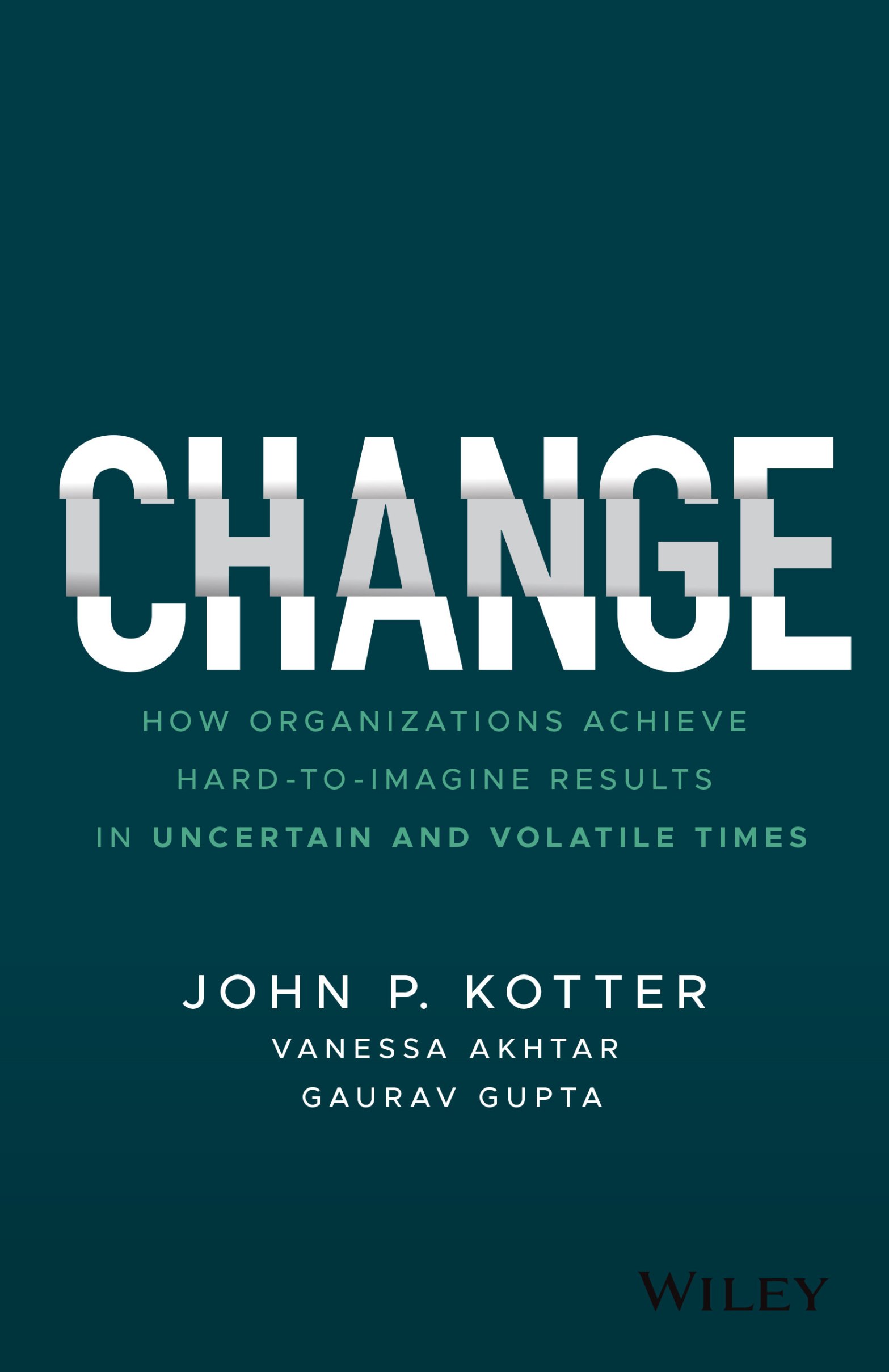
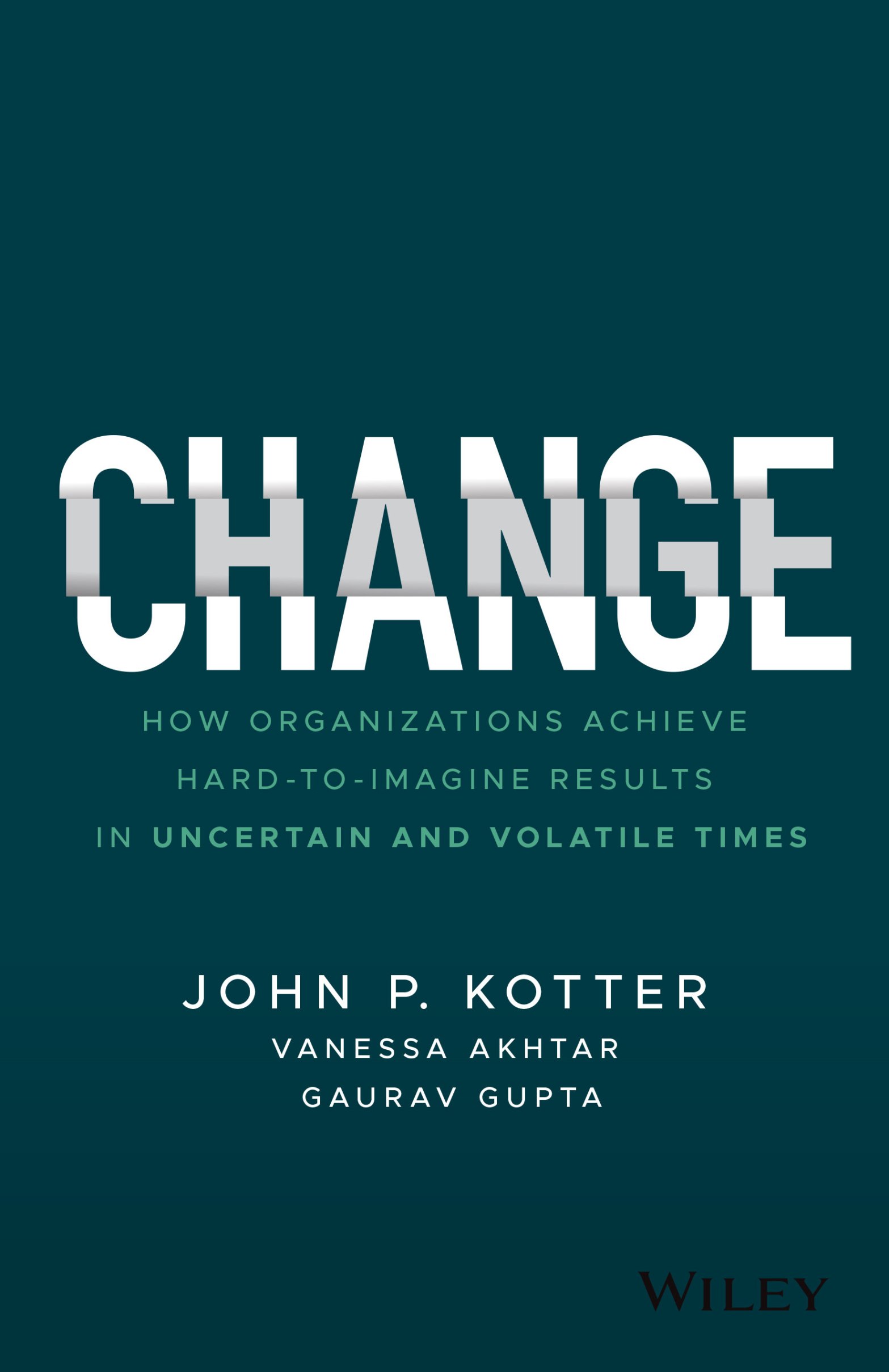
In 2021, John P. Kotter published a new book, Change: How Organizations Achieve Hard-to-Imagine Results in Uncertain and Volatile Times. He could not have come up with a more relevant title, given the tectonic, sometimes disorienting, shifts in social and workplace organization in the midst of a global pandemic, international upheavals, and accompanying economic reconfigurations. 

Eight key change steps 

Kotter is best known as a professor at Harvard Business School and as a thought leader on the topics of organizational change, leadership development, and corporate culture. As an entrepreneur, he heads the consulting firm Kotter International, using the concepts he has developed over a lifetime of working with the Kotter 8-Step Process for Leading Change. 

This model urges leaders to take advantage of urgency; create a “guiding coalition;” build a cadre of enthusiastic volunteer change agents; establish a clear, detailed vision statement; break down barriers; leverage short-term wins to support longer-term end goals; keep accelerating; and allow changes to become new institutional norms. 

Originally studying to become a physicist at Massachusetts Institute of Technology, Kotter turned to business education and fulfilled his growing interest in coaching and motivating others through his doctoral work at Harvard. He went on to author award-winning and influential articles for the Harvard Business Review and books that have been translated into multiple languages and read by millions of readers worldwide. 

The human factor 

In a 2022 interview about Change, Kotter noted how the book centers on new findings in human behavior and the science of brain function, as applied to the management of organizations.  

In the five years prior to the book’s publication, Kotter and his team focused research on the reasons people often have a hard time coping with change. In the book, Kotter and co-authors Vanessa Akhtar and Gaurav Gupta analyze how organizations struggle to adapt to changing conditions—ranging from implementing innovative strategies to fulfilling specific goals for technological transformations. 

The idea is to provide readers with detailed information expanding their understanding of the science of human adaptability to change, while also giving them the strategies they need to create change-management plans in their own organizations. 

Insights you can put to work 

Readers of Kotter’s latest book will learn the reasons why human capacity to leverage opportunities for greater success, as well as our ability to confront challenges and surmount threats, is central to business development in today’s world. And they will find useful case histories giving examples of what has and hasn’t worked for others. 

Kotter and his co-authors drive home the point that change that comes in small increments isn’t going to be enough to tackle the more multifaceted challenges in a world where few things remain certain, and where nimbleness and flexibility are the key to survival. Therefore, they work to demonstrate how to build out the sweeping, dramatic kinds of healthy change that are needed to truly revitalize an organization.  

The book also describes how to harness the various elements of Kotter’s classic change strategy to significantly boost the chances of success across multiple types of organizational efforts. Kotter and his coauthors aim to give readers access to the range of best practices that will make positive change happen quickly, thoroughly, and sustainably over the long term. 

Survive and thrive 

Readers have pointed out that the book shows how most of us underestimate how much the innate human survival instinct can swamp our ability to pay attention to opportunities to adapt, invent better responses, and serve as effective change leaders. The book offers a compelling mapping of the often-unconscious processes that make us unable to respond to change in time, or as effectively as we otherwise might. This aspect of the book—how to “survive and thrive”—has proven to be particularly resonant. 

The framework of Change is structured around three key concepts: human biology and psychology, contemporary organizational design, and research into change leadership. 

Kotter and his co-authors explain how our physiology dictates a constant dynamic between our normal survival-seeking and thrive-seeking behaviors, as we scan our environments for threats in the first case and opportunities in the second. Seeking survival through being alert to threats fosters fear and anxiety and leads to a tight focus on problem-solving. Seeking to thrive brings about a sense of excitement and passion for what we are doing and whets both our curiosity and our capacity to innovate. 

Change shows how the hierarchical structure of modern organizational design is pre-calibrated to favor reliability and control, while keeping us less adaptable and nimble. Finally, in discussing change in the context of leadership research, the book revisits Kotter’s eight-step change acceleration process and the related four core principles guiding change. 

Readers can use these concepts to promote self-awareness as well as create a more intentional, and effective, strategy of change management in any type of organization.